How to Automate Web Form Submissions at Scale (Without Getting Flagged)
For anyone who has experimented with traffic generation tools, one frustrating pattern appears again and again inside Google Analytics:
If you’ve ever built or used traditional web automation, you already know the hard truth:
Most “auto-clickers” on the market do not simulate real user behavior.
They merely trigger a JavaScript .click() event—nothing more, nothing less.
If you’ve ever tried running multiple browser windows at the same time—whether for traffic generation, ad engagement, or behavioral simulation—you’ve probably noticed something strange:
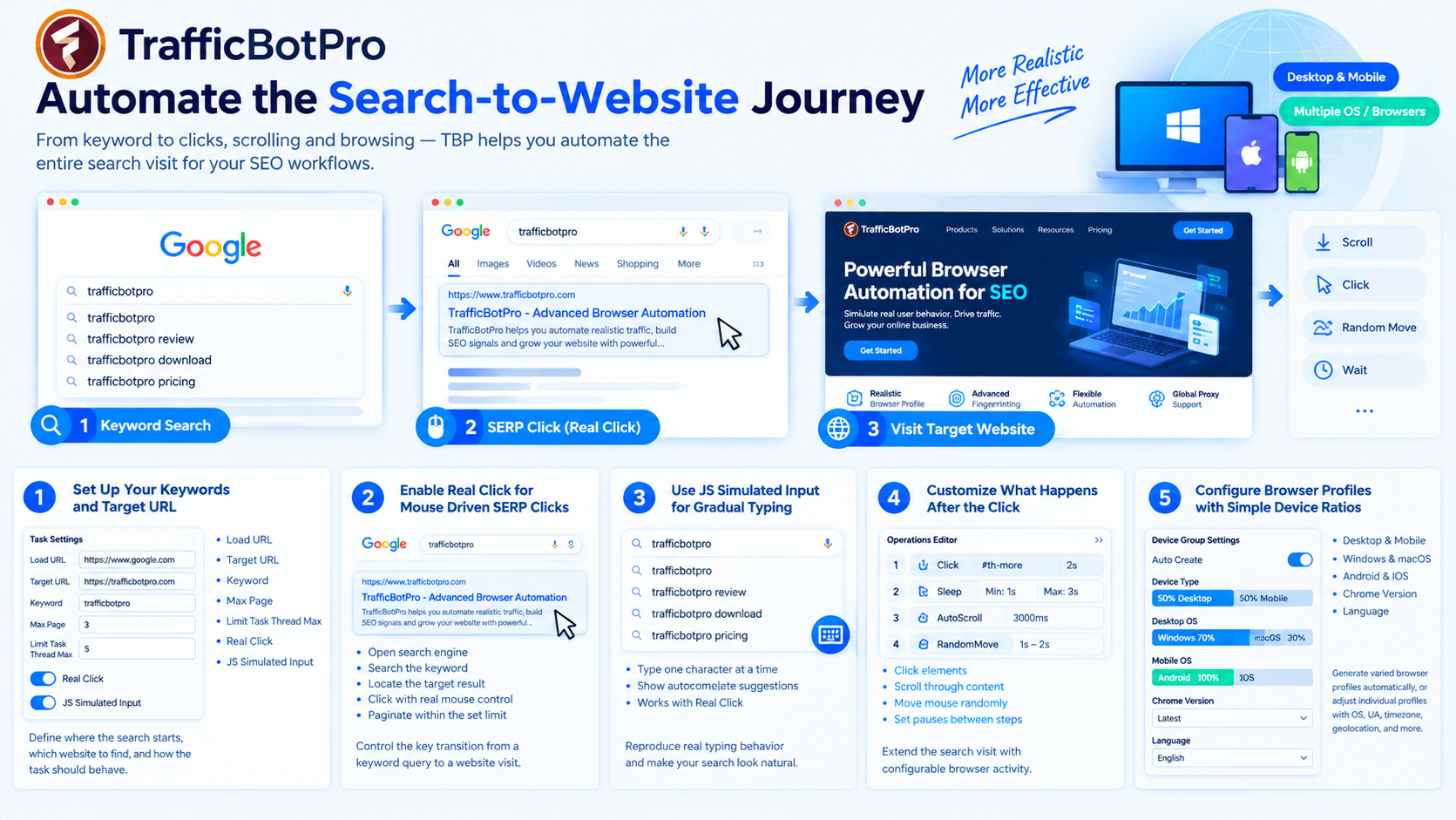
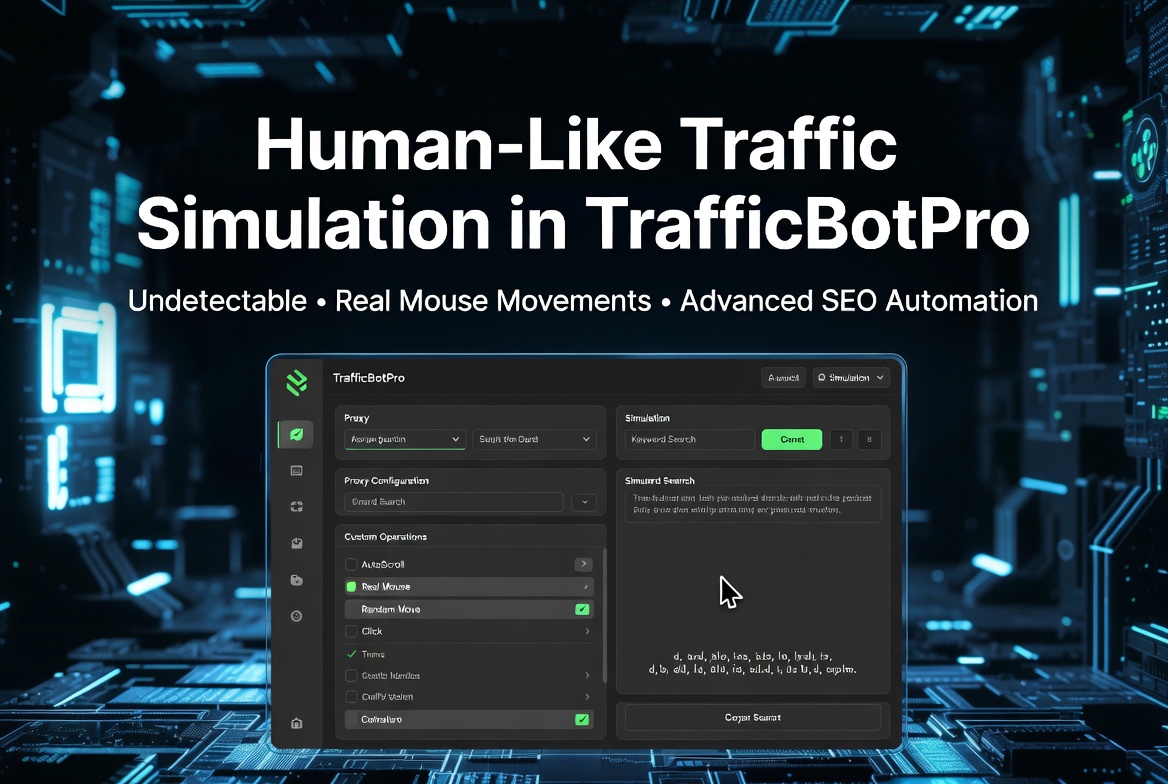
In a world where online platforms rely heavily on behavioral analytics and device fingerprinting to distinguish humans from automation, TrafficBotPro introduces a different game entirely. It is not just a traffic generator. It is a full-stack identity simulator, interaction engine, and automation orchestrator capable of performing nearly any action a human can — with precision, randomness, and anonymity.
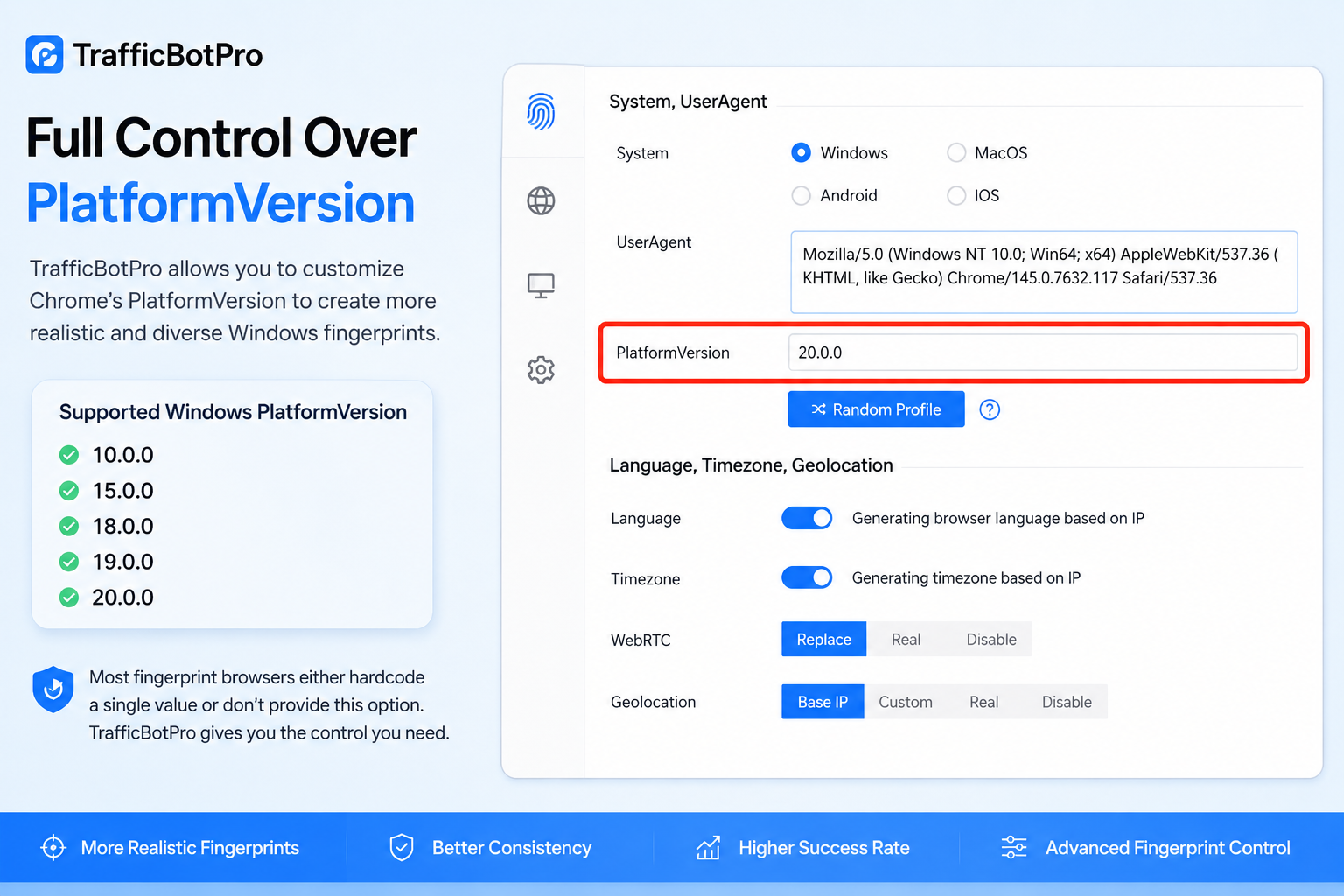
In the world of web automation, your browser has a voice. It’s constantly communicating thousands of data points about its identity, creating a unique digital fingerprint. For developers and researchers, this isn't just a privacy concern—it's the primary gatekeeper blocking reliable data aggregation, robust testing, and accurate security research.
In today’s hyper-competitive landscape of online advertising, many businesses find themselves locked in a bidding war on Google AdWords and Bing AdWords. Advertisers often pour tens of thousands of dollars—sometimes upwards of $100,000—into paid advertising campaigns. Their goal? To dominate keyword rankings and capture audience attention.
In the evolving landscape of web security and advertising fraud detection, browser fingerprinting has emerged as one of the most sophisticated tracking methods. From canvas rendering to WebGL artifacts, from audio context noise to system font enumeration, every subtle trait of a browser can now be harvested to uniquely identify and track users — or detect automation.
Google's advertising algorithms are no longer naive. Over the last decade, the evolution of its ad fraud detection systems has moved from simple click-tracking to sophisticated behavioral analysis powered by AI. Today, when someone clicks a Google Ad, it isn’t just the click that matters — it’s the entire behavior chain: the mouse movement, scroll patterns, dwell time, referral path, and browser fingerprints. Any inconsistency gets flagged, reducing google adsense CPC or even blacklisting your property.