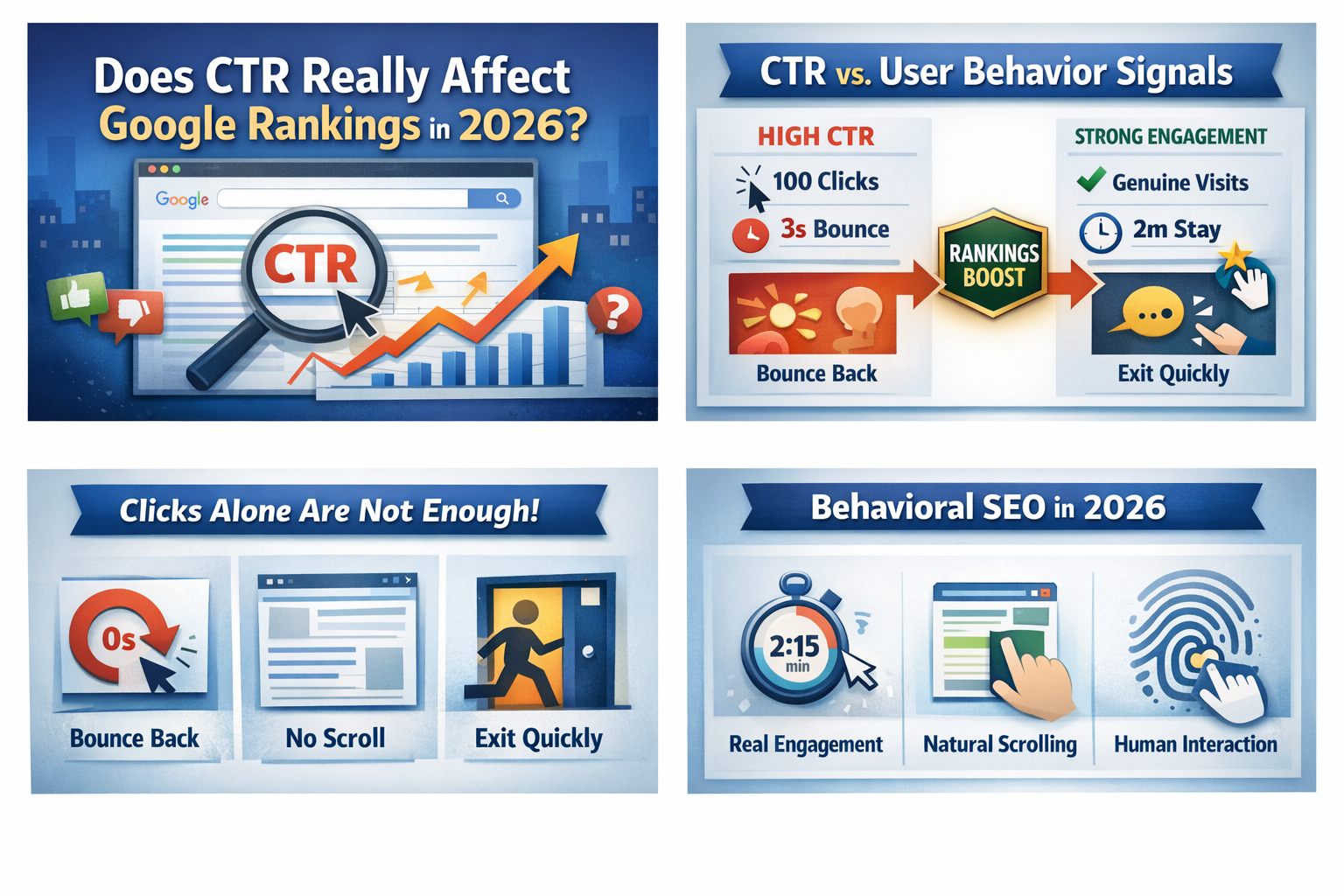
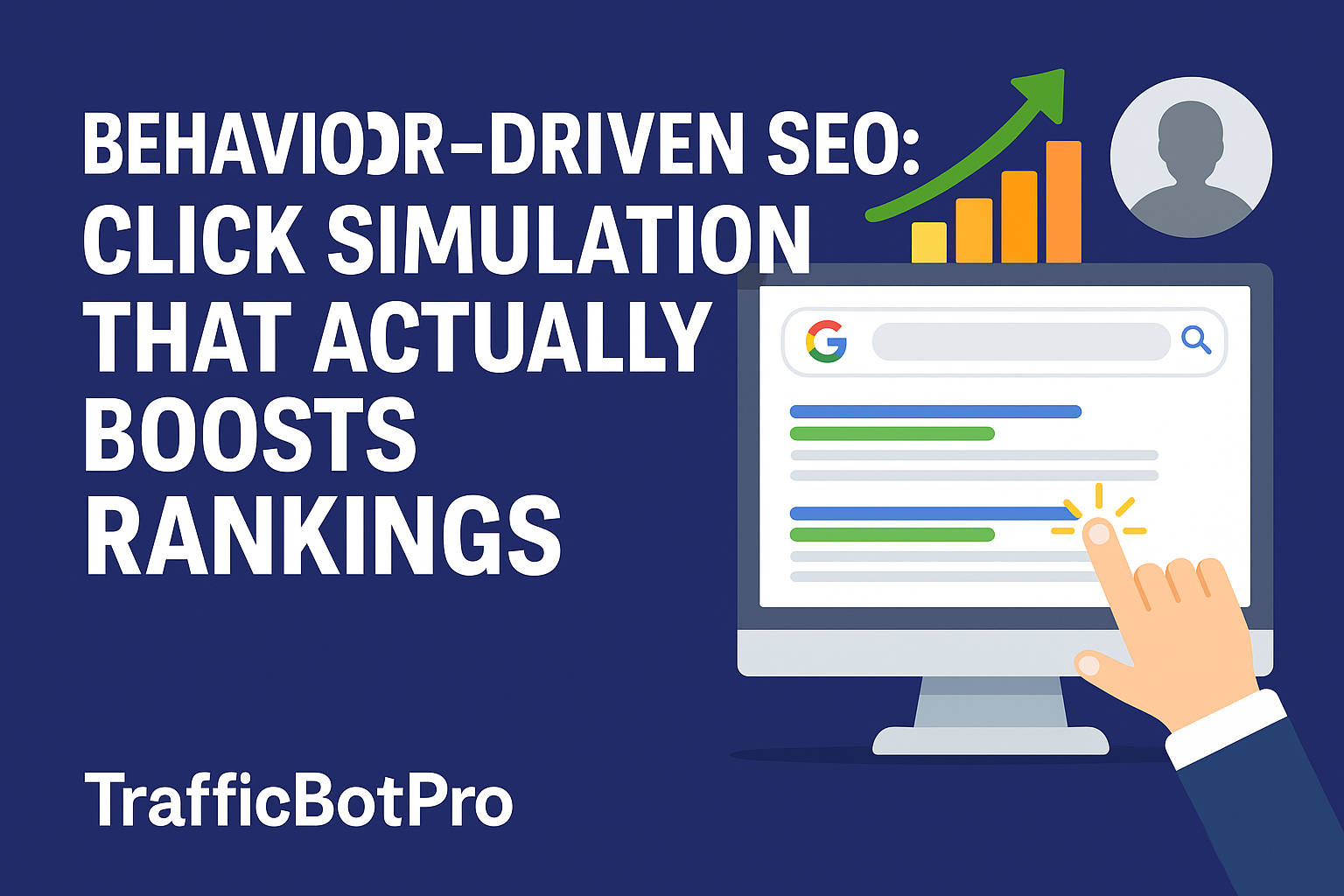
Does CTR Really Affect Google Rankings in 2026?
If you've been in SEO long enough, you've probably heard this debate over and over again:
For anyone who has experimented with traffic generation tools, one frustrating pattern appears again and again inside Google Analytics:
In the world of SEO, the game has changed. It’s no longer about how many backlinks you have or how perfectly optimized your on-page content is. The real question now is: do your visitors act like real humans? Search engines like Google are placing more weight than ever on user behavior signals, which reflect how visitors interact with your site after clicking.
In today’s SEO landscape, the old ways of stuffing keywords, buying backlinks, or increasing content length are no longer enough. Search engines, especially Google, are growing smarter. They now focus heavily on how users interact with a website. Metrics such as click-through rate (CTR), bounce rate, dwell time, and return visits are becoming core signals that influence where your site lands on the search engine results page (SERP).
In the ever-evolving world of search engine optimization, traditional techniques like backlink building, keyword stuffing, and content length have taken a backseat. Today, Google’s algorithms are increasingly focusing on behavioral metrics to assess content relevance and rank websites. Click-through rate (CTR), bounce rate, dwell time, session depth, and return visits are no longer just user engagement stats — they are powerful signals influencing your site’s position on the SERP.
As online businesses continue to grow, it has become increasingly challenging to rank highly in search engine results. One of the most crucial factors that determine your website's rank is its traffic volume. With TrafficBotPro, you can easily boost your website's traffic and improve its ranking in search engine results.