



How Marketers Are Driving More Actions from Google Business Listings in 2026
Ranking in Google local results isn’t just about:
- reviews
- keywords
- backlinks
That’s the old game.
The real question in 2026 is:
What happens after someone sees your business?
Because that’s where most listings either win—or disappear.
Visibility Is Not Enough Anymore
Getting your business to show up is only step one.
What actually separates top-performing listings is this:
- who gets the clicks
- who gets the direction requests
- who gets real user activity
Two businesses can rank similarly…
👉 but the one with stronger interaction patterns always wins over time.
The Shift: From Ranking to Interaction
Google Business listings are no longer static.
They are interactive assets.
Users don’t just view them—they:
- click the website
- request directions
- explore the listing
- visit the landing page
These actions create signals.
And signals create momentum.
The Problem: Manual Effort Doesn’t Scale
If you try to optimize this manually, you’ll quickly hit a wall.
You would need to:
- search for your business
- locate the listing
- click into it
- choose an action
- repeat the process
Now imagine doing that hundreds of times consistently.
👉 Not realistic.
A Smarter Approach: Automating Interaction Flows
This is where advanced automation changes the game.
Instead of relying on random user activity, you can structure and repeat interaction flows.
A typical setup includes:
1. Search & Locate the Business
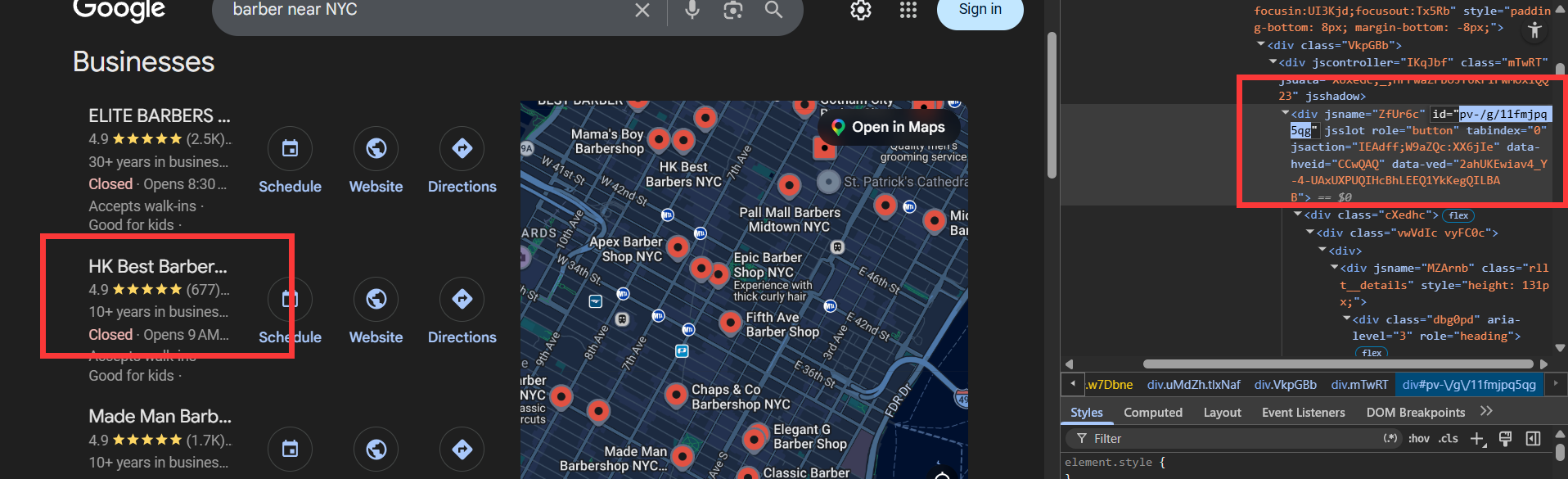
The system performs a real search and identifies the correct business listing using a unique identifier.
For example:
👉 pv-/g/11fmjpq5qg
This ensures precision—no guessing, no mismatch.
2. Trigger Key Actions
Once the listing is found, specific actions can be selected:
- Website click
- Directions request
These are the exact interactions that matter most.

3. Land on the Website
After clicking “Website”, the session moves to your landing page.
And this is where most setups stop.
4. Extend the Session with Custom Actions
Instead of a basic visit, you can define:
- scrolling behavior
- time-on-page
- multi-page navigation
- interaction sequences
This transforms a simple click into a complete session.
Why This Matters
Because not all traffic is equal.
There’s a difference between:
- a quick click
- and a full user journey
Only one of them creates meaningful signals.
Precision with Business ID Targeting
One of the most overlooked challenges is:
👉 finding the exact business listing consistently
Using a Business ID like:
pv-/g/11fmjpq5qg
removes uncertainty.
The system can directly identify and interact with the correct listing every time.
Turning Simple Actions into Scalable Workflows
Once configured, the process becomes:
- repeatable
- consistent
- scalable
You don’t need to manually:
- search
- click
- interact
It runs as a structured workflow.
Where TrafficBotPro Fits In
TrafficBotPro makes this process simple.
Instead of building everything from scratch, you can:
- enable the Google template
- select the action (Website / Directions)
- input the Business ID
- define custom behavior on the landing page
👉 and the workflow runs automatically
Not Just Clicks — Controlled User Behavior
The difference is not the click.
It’s what happens after.
With the right setup, each session can include:
- realistic timing
- interaction flow
- page engagement
This turns isolated actions into complete behavior patterns.
Final Insight
Most people focus on getting listed.
Fewer focus on what happens after.
But in today’s local search environment:
Interaction is what separates visibility from performance